
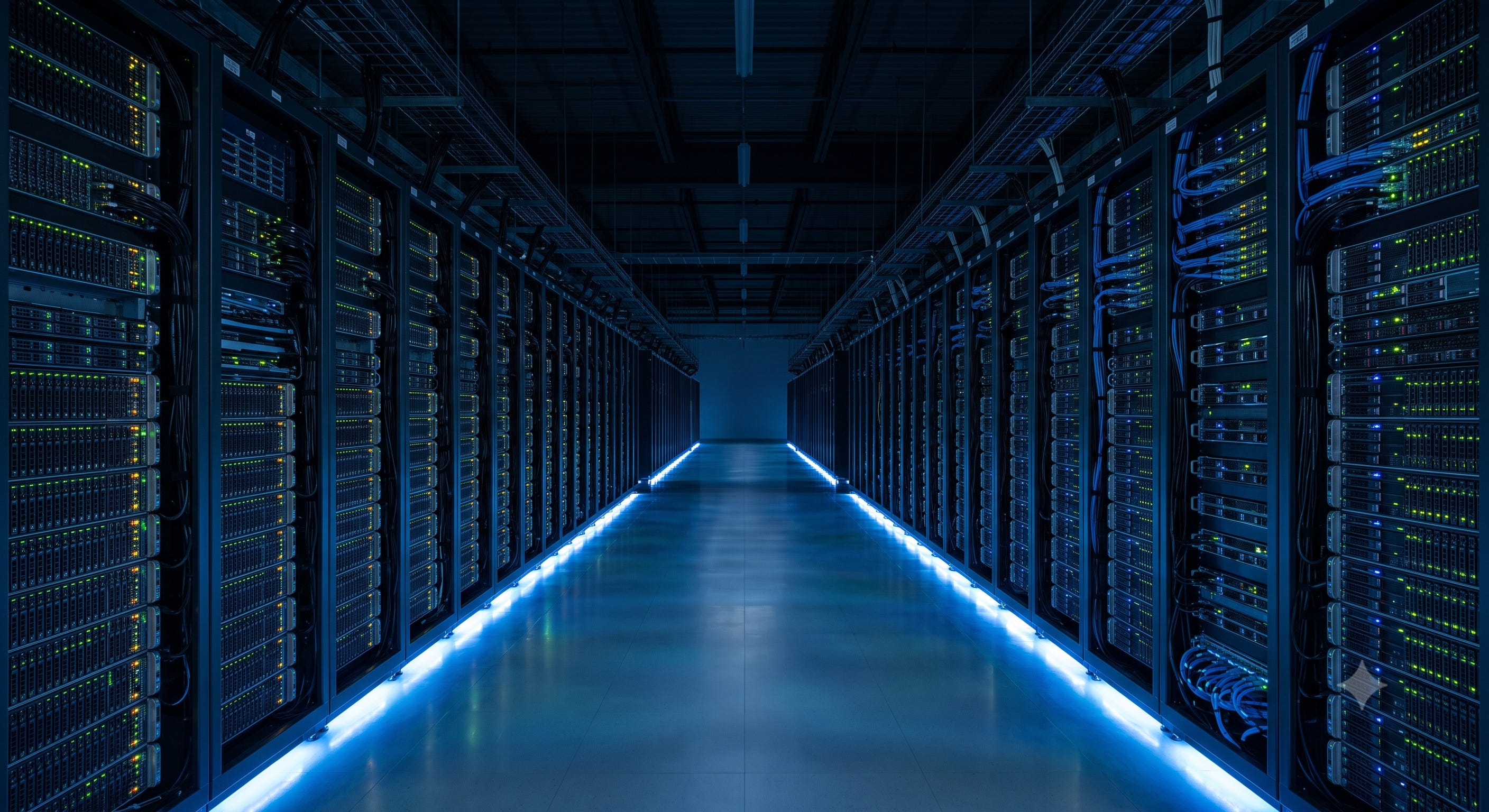
There is a structural misalignment embedded in most data center operations across Southeast Asia where the uninterruptible power supply (UPS) system is treated as an infrastructure of last resort. UPS exists to bridge a gap that is usually measured in minutes, between a grid failure and a generator coming online. Once that handover happens, it returns to standby and is mostly left forgotten until the next maintenance cycle.
This model was defensible when grids were stable, energy was cheap and compliance obligations were light. But none of those conditions hold anymore. Operators who continue treating UPS infrastructure as a passive safety net are leaving serious value on the table and accumulating risk that they are not currently pricing or even made aware of.
What has changed in the operating environment
The disruption to Strait of Hormuz LNG flows following the Iran conflict was a clear signal to energy-dependent economies across the region. Thailand, which relies heavily on LNG for electricity generation, faced sharp increases in fuel and power costs and was forced into emergency conservation measures. For data center operators, this event exposed a vulnerability that had long been underpriced: when the fuel supply behind the grid is geopolitically exposed, no service level agreement (SLA) absorbs those consequences.
Grid cost and reliability can no longer be assumed as fixed inputs in any serious operational model.
The macro trajectory also reinforces this very much. Wood Mackenzie projects on-grid electricity costs across Southeast Asia to rise fourfold by 2035. Singapore is already at the sharper end of that curve, with on-grid tariffs at US$178/MWh in 2025 which is the highest in the region. Against that backdrop, data center power demand across Southeast Asia is also projected to grow from 2.6 GW today to 10.7 GW by 2035. That demand growth carries an energy cost that sits on the balance sheet whether operators are ready for it or not and most are not.
Regulatory pressure has also moved in parallel. Singapore’s critical infrastructure designation under the Cybersecurity Act now brings mandatory resilience assessments, audit obligations and a regulatory posture that treats a major facility outage as a systemic risk event. The 2023 incident that took DBS and Citibank offline simultaneously — an estimated 2.5 million failed transactions from a single facility failure — is the point that shaped that policy shift. The DC-CFA2 program, launched in December 2025, ties new capacity allocation to demonstrated energy efficiency, including a PUE ceiling of 1.25 at full IT load, the strictest standard in Asia-Pacific.
Market access in Singapore’s constrained, high-value environment is now contingent on how well operators manage their entire energy infrastructure and not just how much renewable energy they can claim on paper.
The UPS model is structurally broken for this environment
The traditional approach to UPS management has three characteristics that are now actively costly. First, it is reactive and intervening only when a fault is detected. Second, it is static; relying on capacity assumptions set at commissioning that may no longer reflect current load profiles. Lastly, it is also isolated since the UPS mostly operates as a standalone device, disconnected from on-site storage, real-time tariff signals and broader facility energy management.
The first failure mode is capacity drift. UPS systems are specified at nameplate load, but AI workloads are driving rack densities well beyond what most facilities anticipated at commissioning. A system installed three years ago with backup runtime calculated against the load profile of that period may have materially less available backup time today and battery degradation compounds this further, especially if the UPS is underutilised and kept at full charge most of the time. Most operators do not have clear visibility into this gap because actual capacity under current draw has not been reassessed since installation. In a market where regulators now require demonstrable resilience, that visibility gap is an audit liability.
The second problem is isolation. If a UPS doesn’t communicate with on-site storage, grid pricing signals or real-time load management, it cannot be optimised and can only react. The intelligence needed to manage backup power well i.e. knowing actual battery state, anticipating demand peaks, responding to tariff movements, all sits outside the system if the UPS operates as a standalone device. All this value that could have been extracted from the asset sits permanently locked away because the operating model was just never designed to access it.
And this matters more now than it did. Under Singapore’s critical infrastructure designation, operators face mandatory resilience assessments and audit obligations for how they manage and protect their systems. So the question is no longer whether resilience exists in principle, but whether it can be documented, tested and defended to an external auditor.
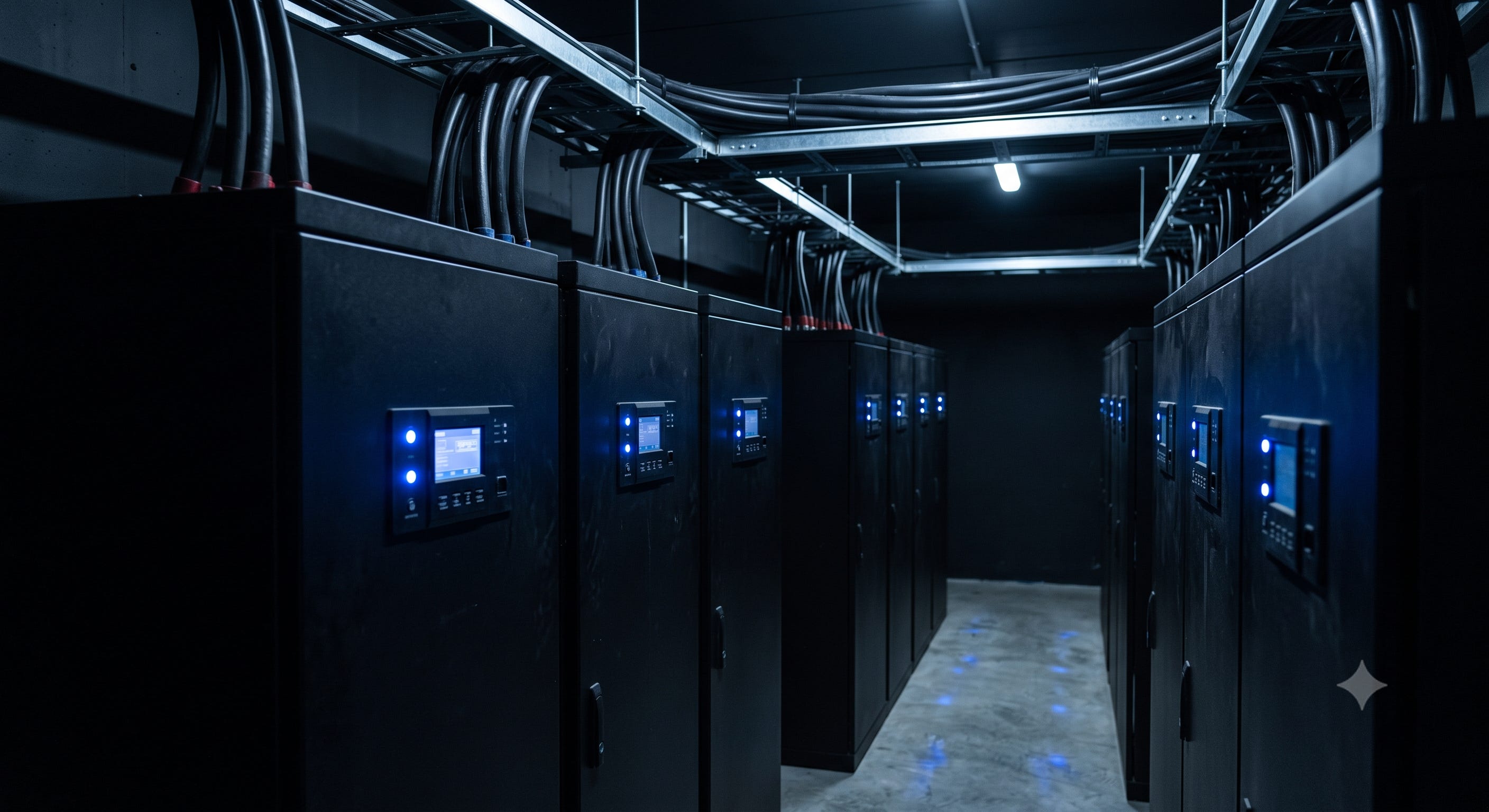
These assets can offset energy costs at scale but operators are not capturing it
The very same battery and backup infrastructure protecting against grid failure can, when actively managed, also function as a revenue-generating asset. This is economically material for large facilities.
Here, peak shaving is the most immediate mechanism. By deploying stored battery power during high-demand periods, operators can structurally reduce their contracted capacity ceiling and avoid penalty tariffs, which run at 1.3 to 2x standard rates when that ceiling is breached. In Singapore’s tariff environment (the most expensive in the region and rising), keeping draw below the contracted threshold is not a minor optimisation. For large facilities, this is a material cost reduction at the asset level.
Tariff arbitrage adds a second layer. Where time-of-use pricing applies, battery assets managed with real-time tariff visibility can charge during low-cost windows and discharge during peak pricing periods. Most mid-to-large facilities already have the asset base required to do this. The gap lies in the controls and the data infrastructure to act on it.
Market participation where local market rules permit, further turns battery assets into a revenue line against existing infrastructure. Regulatory frameworks enabling this vary across the region and are still developing in several markets but the direction is clear and those operators building the capability today are positioning themselves ahead of the curve.
For a large facility, the combination of avoided peak tariffs, arbitrage capture and market participation can offset a meaningful share of total energy costs in well-configured deployments, potentially representing several hundred thousand dollars annually against infrastructure that is already on the balance sheet.
Only that none of this works without visibility. You need accurate, real-time data on battery state, available capacity and system interactions across the facility.
But most operators are monitoring for faults and not managing for value. Their model operates on a break-fix principle. While it tells you when something has gone wrong, it doesn’t tell you what the asset could be doing. Closing that gap through smart monitoring, integrated controls and active energy data management is what turns a passive cost centre into an asset that actively works against rising energy costs.
As an added benefit, an energy storage asset managed dynamically with regular, controlled charge and discharge will actually maintain its capacity longer than if it was kept at full charge most of the time.
The battery expansion question operators should be asking
The active management case applies to existing UPS assets. But the more consequential question for operators planning capacity growth is whether the battery infrastructure they commission going forward is designed for this environment or sized to the assumptions of the previous one.
Greenfield battery deployment, integrated into facility energy architecture from the outset, changes the economics substantially. The scale of arbitrage and market participation is then directly tied to battery capacity. Operators who deploy more storage, designed with grid services participation in mind, can access a proportionally larger revenue offset against rising energy costs.
Resilience and revenue are not competing arguments for battery investment but are in fact, the same one.
A different way to think about energy infrastructure
The pattern across these recent events— Singapore’s regulatory tightening, the Johor buildout pressure and the LNG supply disruption all points to the same conclusion: energy in a data center is not a passive input. It is an active variable that determines compliance standing, operational continuity, cost structure and a significant revenue contribution for operators who engage with it seriously.
UPS systems are the convergence point for all of this; where grid exposure, on-site generation, battery storage and load management intersect. Operators who manage this intersection well can hold a structural advantage in an environment where the cost of getting it wrong is rising on multiple dimensions simultaneously.
Amplicity Energy works with mission-critical facilities across Singapore and the broader APAC region on battery and UPS infrastructure. Our work covers active UPS management, greenfield battery deployment integrated with grid services participation and the energy data infrastructure that makes the economics work. If your team is navigating capacity growth or energy cost exposure in this environment, get in touch with us at contact@amplicity.energy
Note: Images generated using Google Gemini.